School Days Scotland
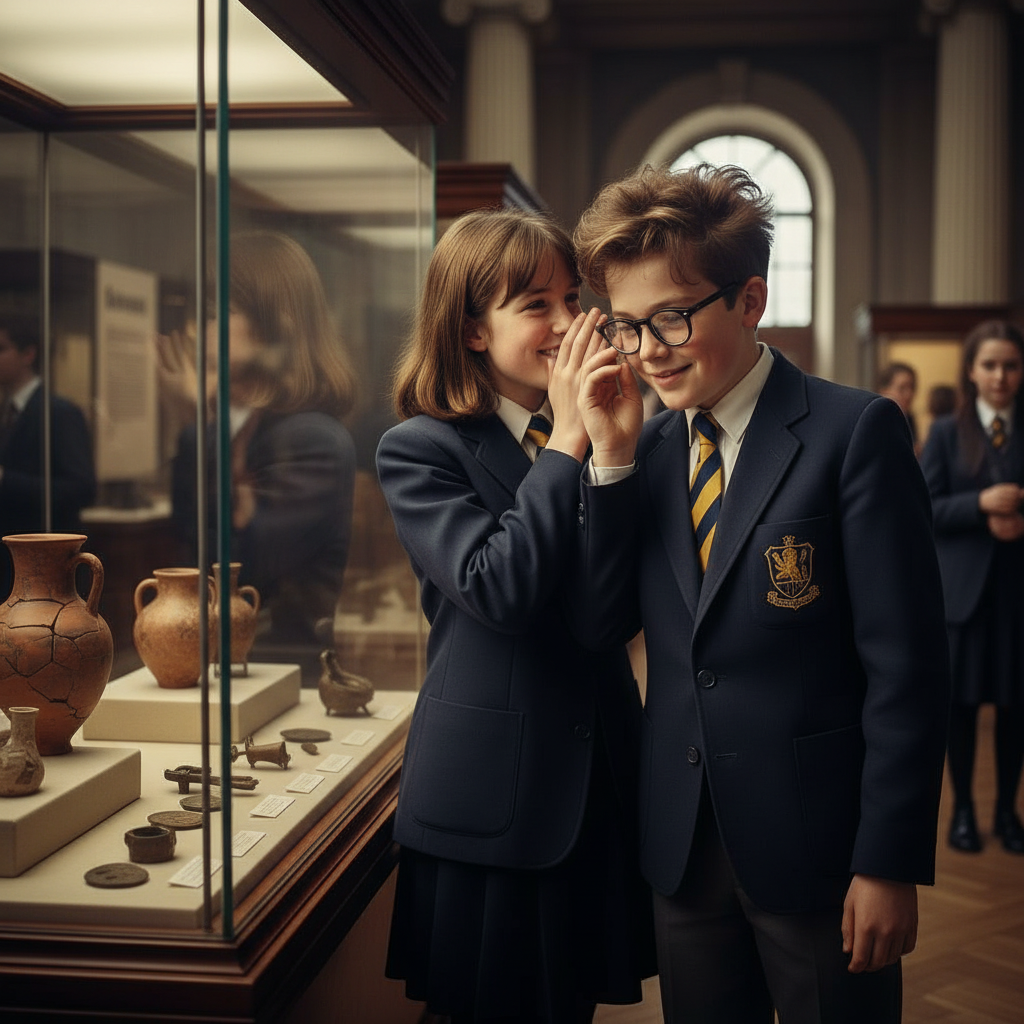
In September 1968 the world is shifting—The Beatles are on the roof of Apple Corps, and the “Summer of Love” is a fading echo—but for fourteen-year-old James, the world has narrowed down to the grey, salt-sprayed coastline of a town that feels entirely foreign.
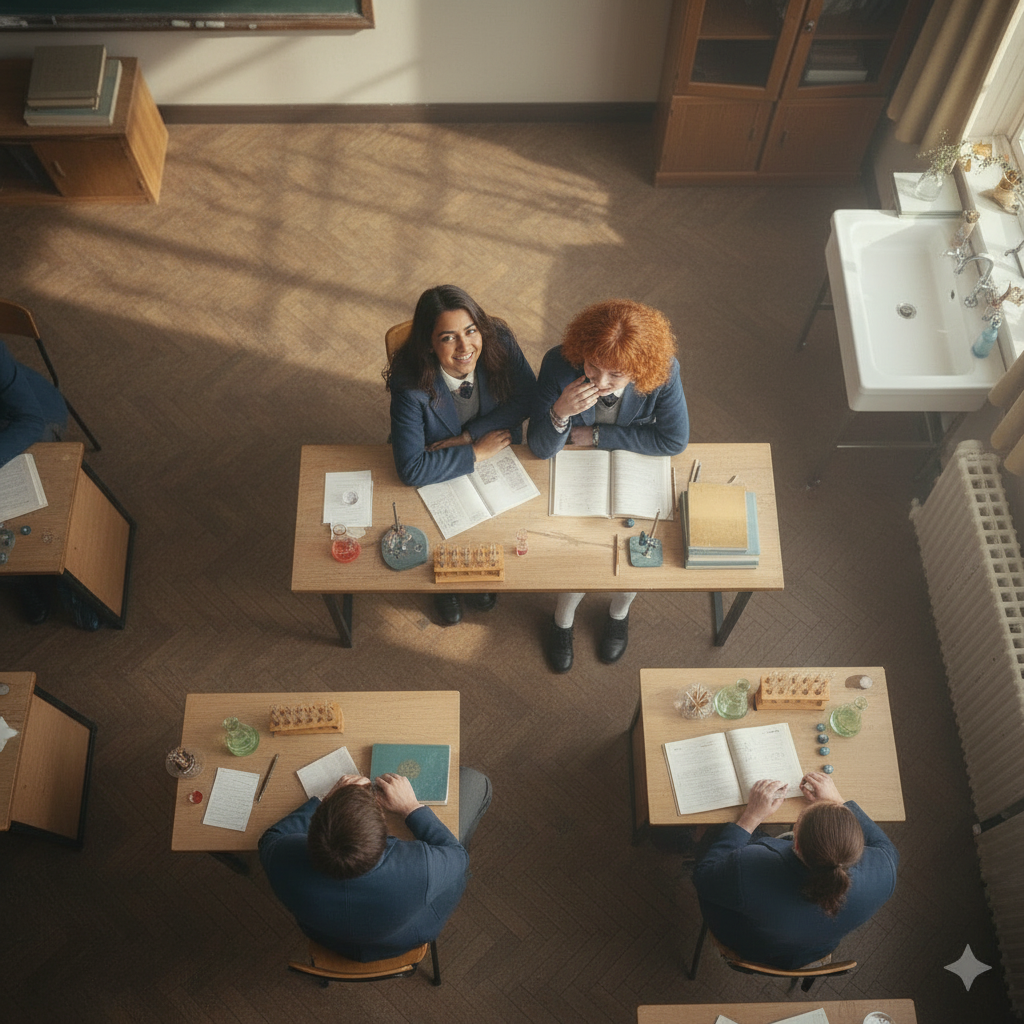
The transition to the North has been jarring. In his old school, he was the “Professor” who had a niche. Here, in a single-class year group, there is nowhere to hide. Every social interaction feels high-stakes, like a chemistry experiment where he’s forgotten the stabilizer.
His lunchtime ritual is an act of tactical withdrawal. The baker’s shop is a sanctuary of steam and yeast; the meat pie, hot enough to burn his roof, is his only companion. Then the walk down, across the golf course to the sea.
He walks the shoreline not because he loves the sea, but because the sea doesn’t ask him questions. The sound of the waves crashing against the pebbles drowns out the imagined laughter from the school gates.
He thinks about how easy it is to become a ghost. In his mind, he is a giant, capable of understanding the stars and the deep structures of history. In the school corridor, however, he feels like he’s made of glass—too easy to see through, too easy to break.
Then there is Laura. In his old life, Kate had been the one to reach out and pull him into the light. Bryony had become almost a friend and certainly not a “girl” to be chased. Laura is different. She is quiet, with a way of looking out the window during English Lit that makes James think she’s also somewhere else.
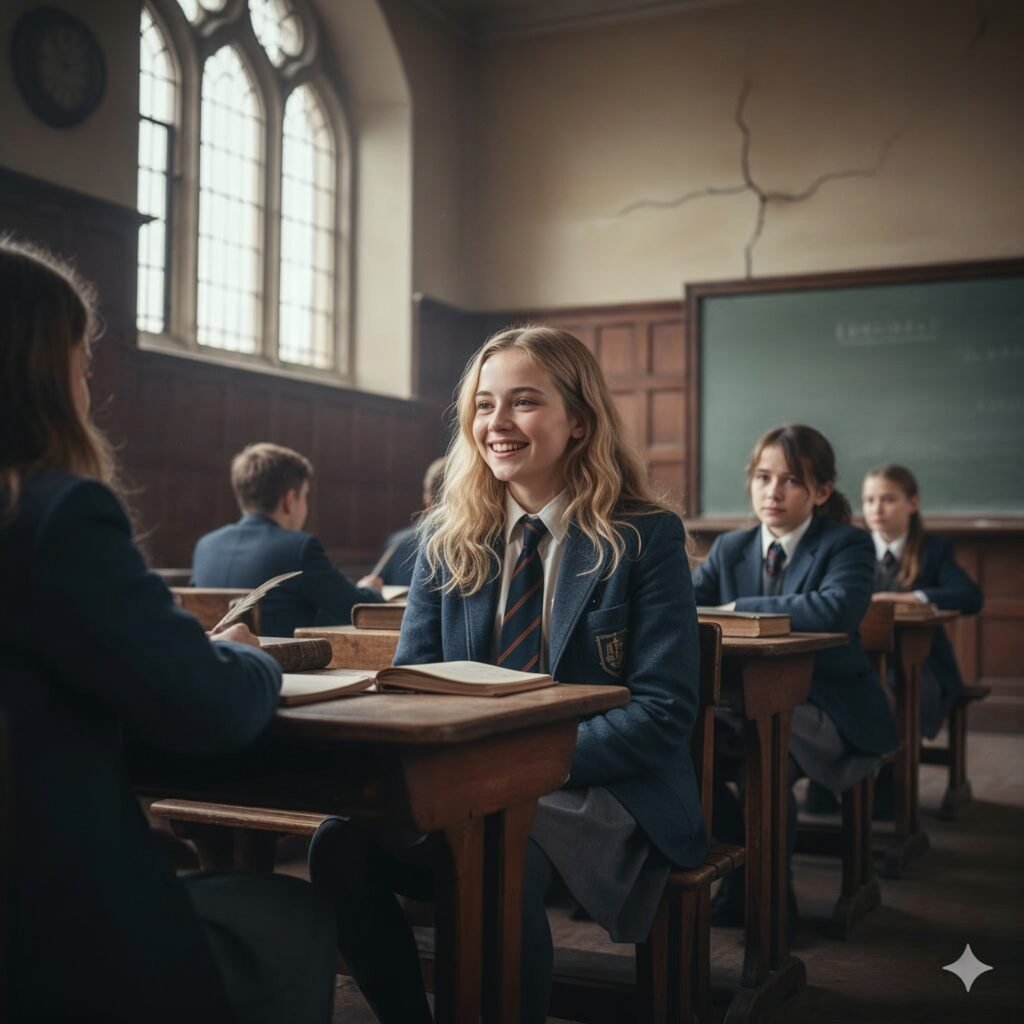
He spends his walks debating the “Logistics of the Approach.” Should he sit next to her in the canteen. (Immediately discarded—too public, too much risk of spilling his squash). Or perhaps he should mention the homework. (Too boring. He’s already the ‘clever one’; he doesn’t want to be the ‘tutor’).
His mind keeps circling back to that night with Kate. He has convinced himself that the Christmas dance was a statistical anomaly. He believes that if he tries to recreate that magic with Laura, he will fail, and this time, there won’t be a move to another school to save him from the embarrassment.
As he tosses the crumpled greaseproof paper from his pie into a rusted bin, he feels a strange mix of pride and loneliness. He is the master of his own internal kingdom, but as the school bell echoes faintly from the top of the hill, he realizes that the invisible walls he’s built to keep the world out are starting to feel like a prison.
He heads back toward the old stone building, adjusting his glasses and bracing himself to be the “boy who is top of the class” while feeling like he’s at the very bottom of everything else.
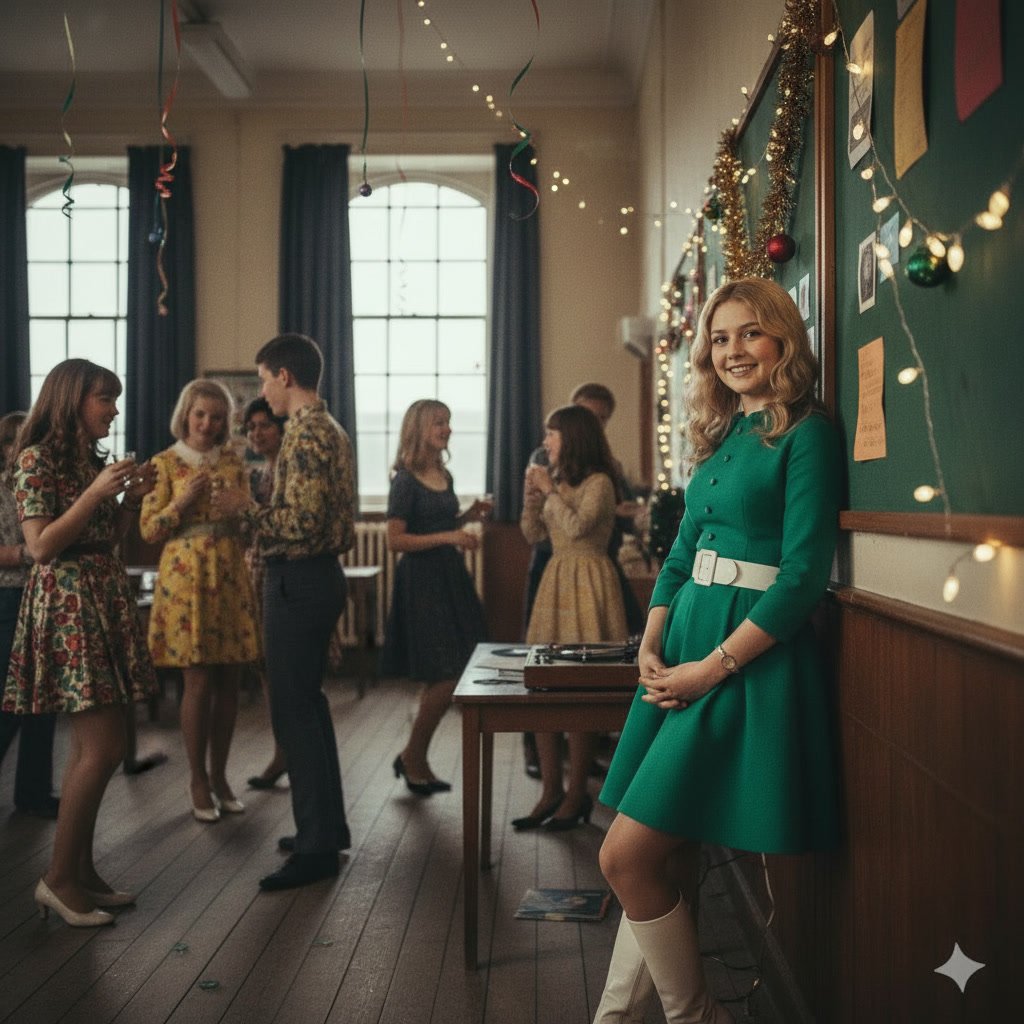
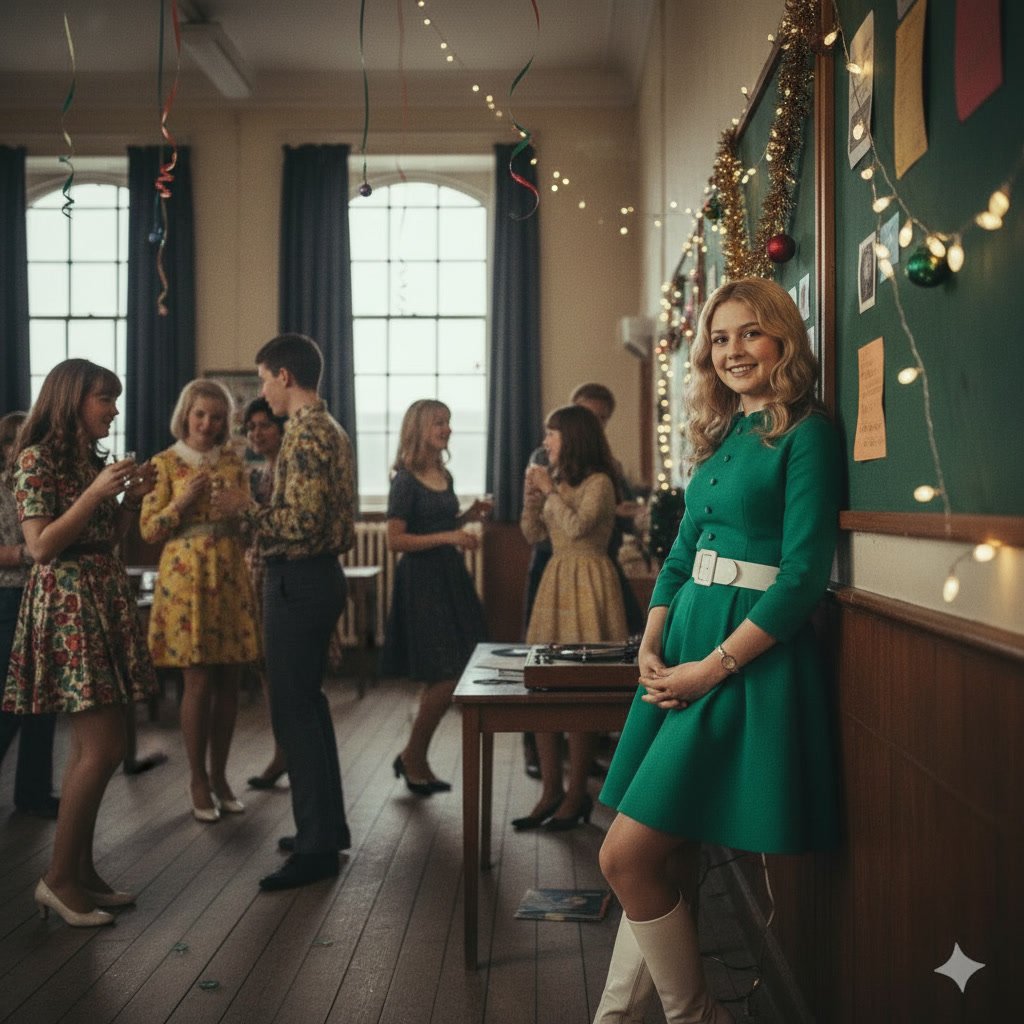
December 1968. The school hall is colder than the one in the south—drafty stone walls and high, vaulted ceilings that swallow the sound of the record player. The air smells of damp coats and pine needles.
James is fourteen, taller but still outwardly a “little boy”. He’s wearing a new shirt—maroon this time—but the same polished school shoes. He spends the first half of the evening in his usual position: leaning against the wall near the lemonade, observing the room like a scientist watching a complex, chaotic reaction.
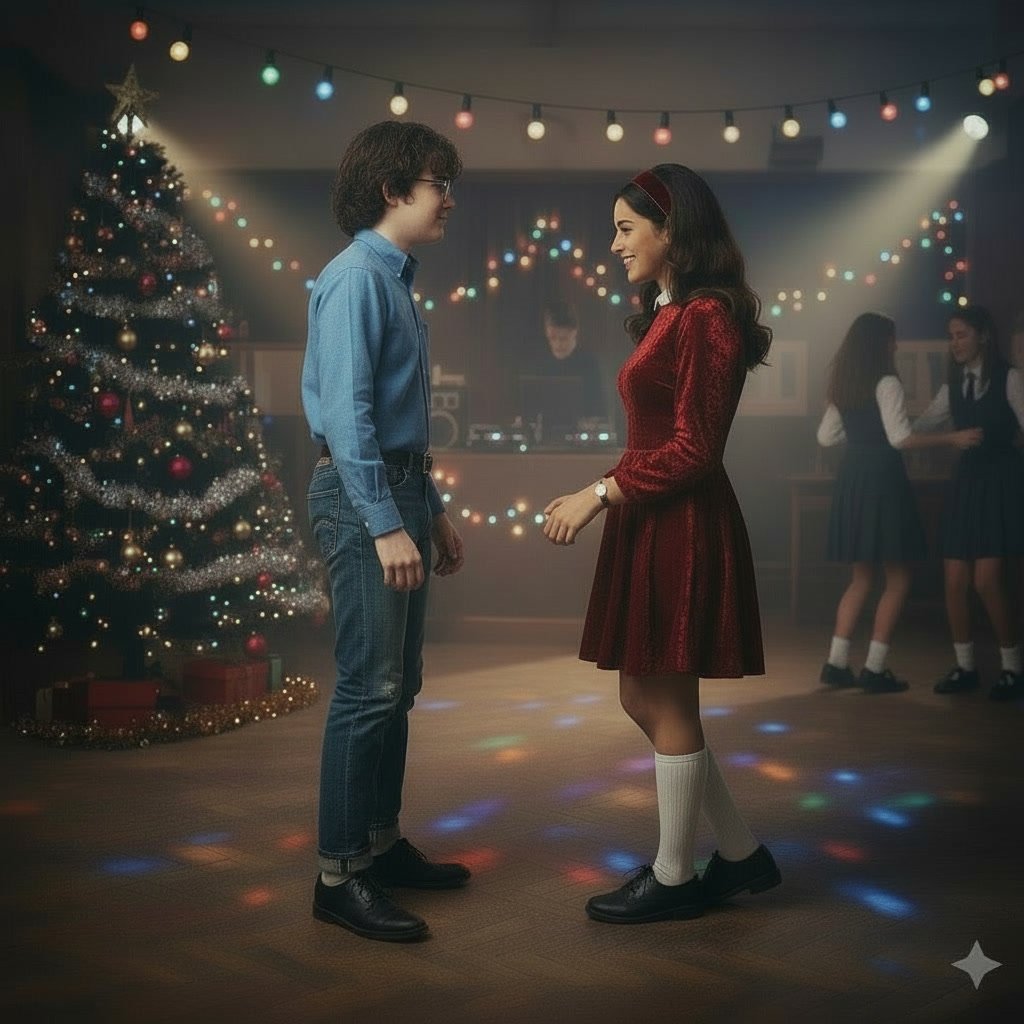
The group chorus to “Lily the Pink- the savour of the human race” sounds forlorn rather then uplifting.Then, the “Slow Dance” starts. The lights dim to a murky purple. “Nights in White Satin” begins to play.
To his own shock, James finds himself walking toward Laura. His heart is a drum in his chest. He asks; she nods. For five minutes, the shoreline is forgotten. He breathes in the scent of her perfume—something floral and light—and she rests her head, just for a second, against his maroon shoulder. He thinks, This is it. This is the moment the retreat ends.
But the geography of the North is cruel. This isn’t a walk down a gravel lane; it’s a coordinated military extraction by the local bus company. At 22:20 Mr MacKenzie the maths teacher stands on the stage, waving his arms. “Bus students! Ten minutes! If you’re not on that coach, you’re walking home in the snow!”
The magic is broken by the frantic search for coats and scarves. The atmospheric purple light is replaced by the harsh, yellow glare of the overhead fluorescent tubes.
James manages to sit in the seat behind Laura. He watches the back of her head, wanting to reach out and touch her hair, to say something—anything—about the dance. But she is surrounded by her friends, a bright, impenetrable circle of girls laughing about the PE teacher’s dancing. The intimacy of the hall has evaporated in the cold air of the bus.
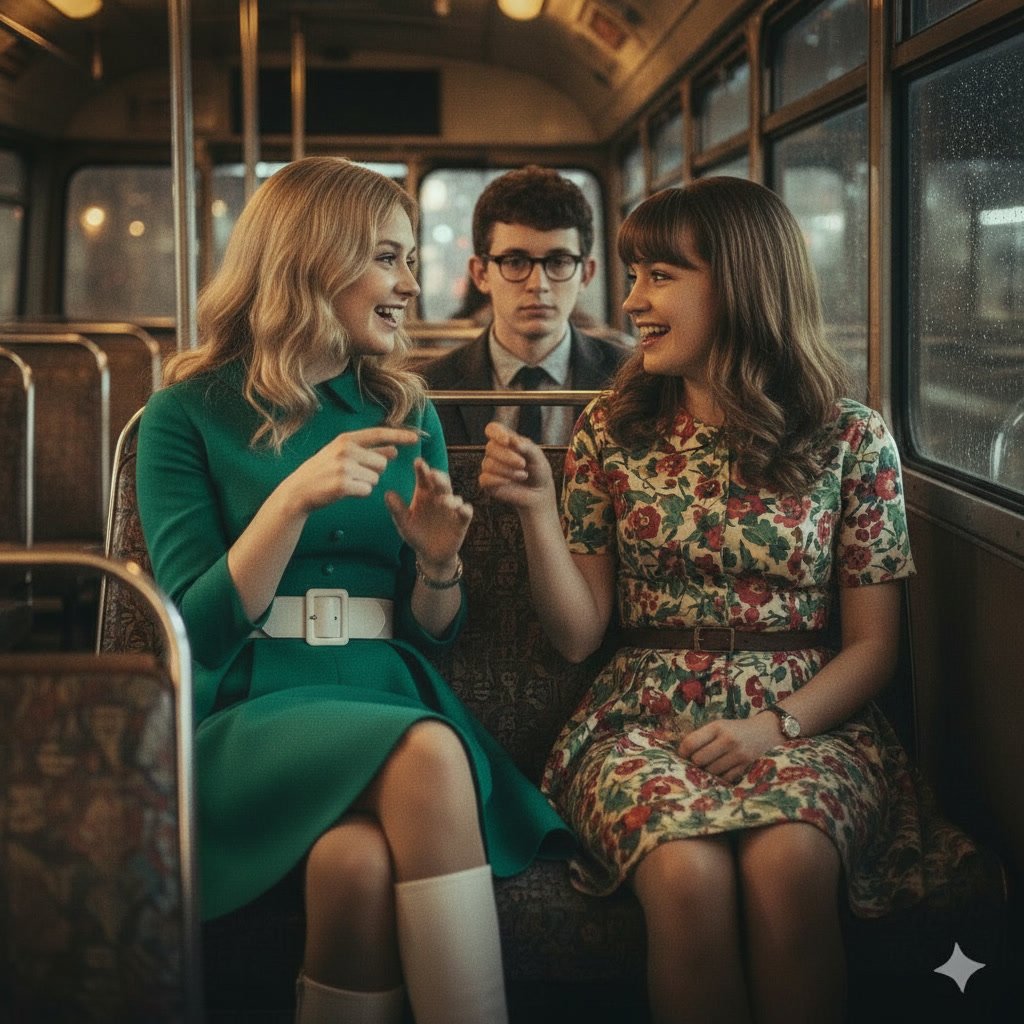
The bus hisses to a stop at the end of the village. Laura stands up, smoothing her skirt. As she moves down the aisle, she pauses next to James’s seat.
Her friends are already clattering down the steps into the dark, but she lingers for a heartbeat. She looks directly at him—not as the “top of the class,” but as the boy who held her while the music played. She gives him a small, tired, but incredibly sweet smile.
“Night, James,” she says softly.
Then she is gone, stepping off into the winter mist.
James sits in the rattling bus for the rest of his journey, staring at his reflection in the dark window. He is flooded with a mixture of intense joy and crushing frustration. The smile was a bridge, but the bus was a barrier. He realizes that while he didn’t retreat this time, the world stepped in to do it for him.
Christmas and New Year at home are torture. If school is a place to hide, James wishes he could be there instead of being cooped up with his family. His elder brothers who bully and mock him for his lack of physical growth. His mother who despairs against the mad idea of his father to come and live here and who even now is planning his own escape.
Dawn breaks as James laces his boots, the house silent around him. Outside, frost crunches beneath his feet. The cliff path stretches ahead—five miles of promise. Laura’s name beats in rhythm with his footsteps.
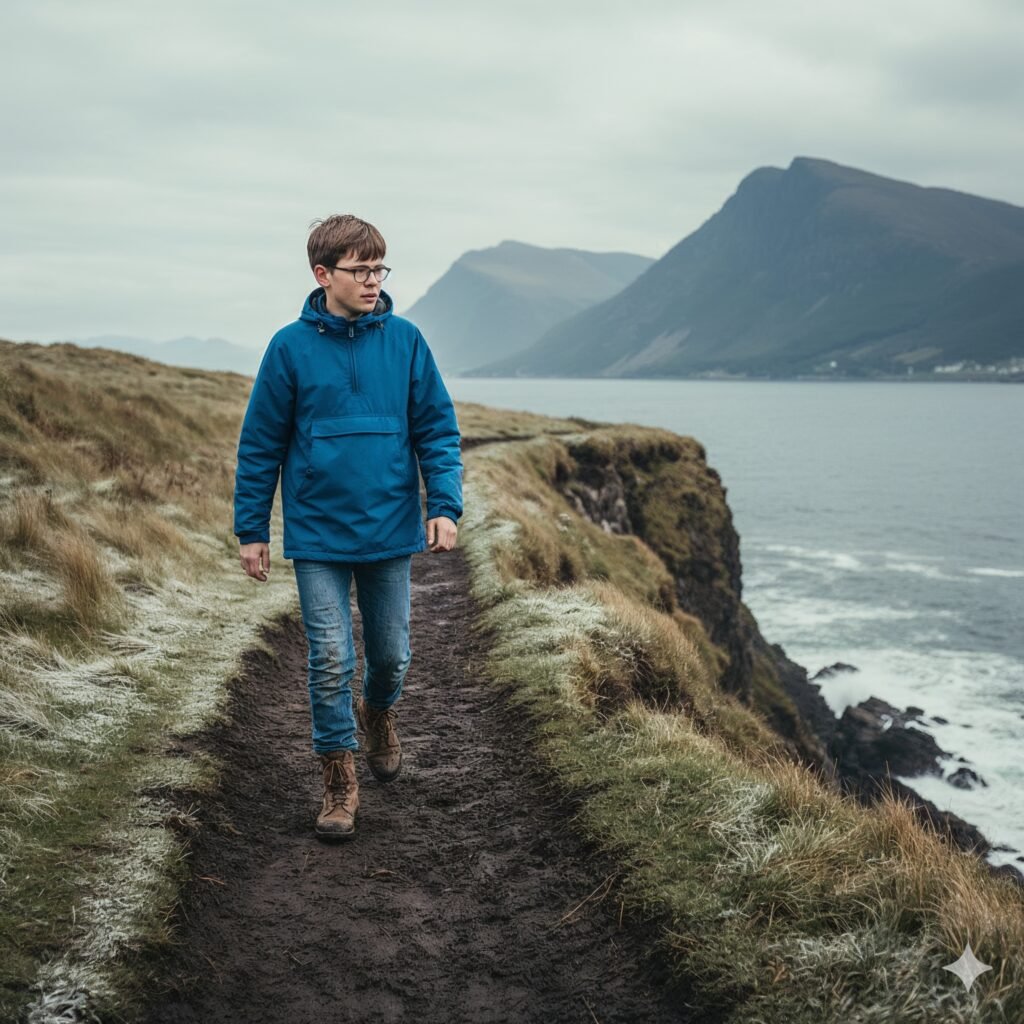
His calves burn on the third steep incline. Sweat trickles down his back despite the January chill. The path narrows dangerously near crumbling edges, widening again through patches of gorse that snag his trousers. Salt spray mists his glasses. Still, he pictures her door, his knuckles against wood, her surprised face.
In the village, seagulls circle overhead as he counts house numbers, heart hammering. Number 8. Red door. Curtains drawn. His hand rises, hovers, falls. His shadow stretches long behind him as he turns away and begins the even longer journey home.
The farmer’s truck smells of hay and whiskey. “Girlfriend trouble?” he asks, grinning through tobacco-stained teeth. James watches the cliffs recede in the side mirror, darkness settling as he limps the final stretch home, blisters forming on both heels.
That evening, he lies in his bed. Quiet so that he doesn’t wake his older brothers who would make his life even more miserable.
Is he fated to always walk the cliffs and seashore alone, a prisoner of his own thoughts?